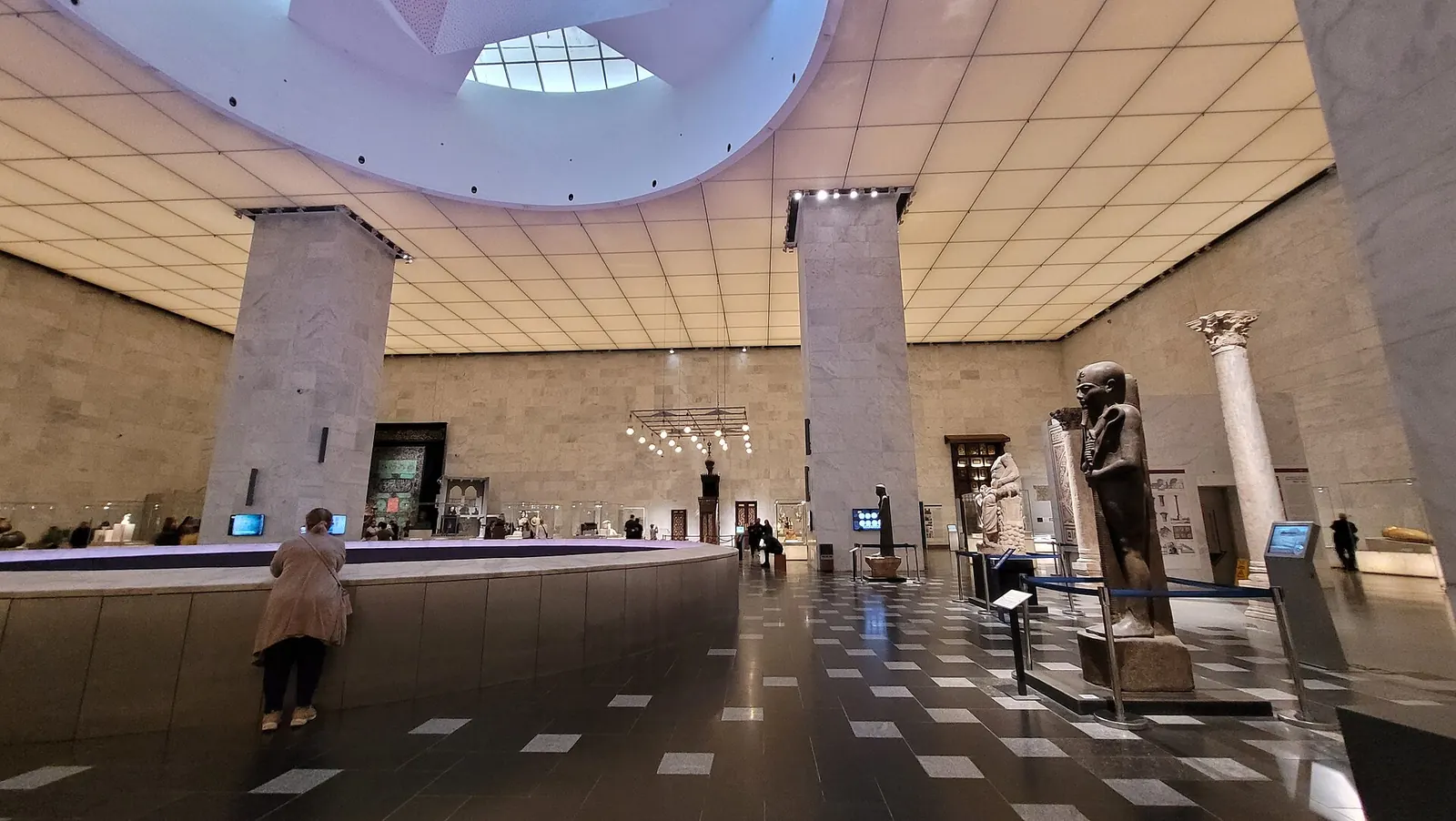
Reading Nubian collections through landscape and colour. This guide offers a starting sequence, not a fixed interpretation or a promise about what will be on display.
01 · START WITH EVIDENCE
Look before naming.
Begin with what is physically visible: material, scale, surface, joins, damage and the choices made in display. Description is not a lesser form of interpretation; it is the evidence that keeps interpretation accountable.
02 · ADD CONTEXT
Objects have more than one date.
Then widen the frame. An object entered a museum through a sequence of making, use, reuse, excavation, documentation, conservation and display. Not every stage is equally well recorded, and a responsible account should make those gaps visible.
The date of manufacture is only one kind of time. Use, repair, collection and redisplay also belong to the object’s biography.
03 · KEEP THE CLAIM OPEN
Good questions survive revision.
Finally, compare the label with the object and with information published by the holding institution. Dates, attributions and gallery arrangements can change. Treat this page as a route into current research, not as a substitute for it.
Ask what evidence would strengthen the claim, what alternative explanation remains plausible, and which source could be checked next.
Before you rely on this guide
Opening hours, ticket rules, access arrangements and displays change. Confirm practical details with the museum’s official channels. For collection facts, begin with museum catalogues and the institutional sources listed on our Sources page.